What That Noise Is Actually Telling You
Broken Arrow homes built mostly 1974-2005 use specific opener and spring hardware.
Read moreBlogBroken Arrow, OK · 4 min read
Broken Arrow's 1980s-90s opener stock wasn't built for winter power cuts. Here's what local housing age and climate mean for your opener, and what to check first.
Local detail
Most houses in this area went up between 1974 and 2005, with the bulk of the stock dating to the 1980s and 90s. That matters more than people think, because battery backup wasn't standard equipment on garage door openers until well after most of these units were installed. If your house falls in that window and you've never swapped the opener, you likely have a chain-drive unit that goes completely dead the second the power does.
Broken Arrow sits in a cold moderate climate band, which means winter weather here isn't a once-a-decade event - ice and wind knock out power on a regular basis most winters. When that happens with an opener that has no backup battery, the door is stuck wherever it was when the lights went out. If it was open, it stays open. That's not a defect in the opener. That's just what openers from that era were built to do, or not do.
Across the 14 communities this company covers, from Coweta and Bixby in close to Sapulpa and Mounds farther out, the pattern repeats: older opener, no backup, same vulnerability when a storm rolls through.
The area
There isn't one number that covers this, because the job depends on what you're starting with. An opener from the 1980s or 90s stock common in this area usually needs full replacement rather than a bolt-on battery, since most units that old don't have a wiring harness that accepts a backup pack. A newer opener, even one only ten or fifteen years old, may just need the battery kit added.
The other variable is the door itself. If the spring or cables are also original to a house built in that 1974-2005 window, you're looking at more than just the opener. We don't like quoting a number over the phone before we've seen the unit, because guessing wrong either scares a homeowner off a job that was actually simple, or undersells one that needs more work. What we can tell you up front: if your opener predates battery backup entirely, replacing it is usually the straighter path than trying to retrofit around old wiring. That's not us steering you toward a bigger job - it's that the parts to retrofit a unit that old often aren't available anymore.
What we find
When power drops mid-cycle, a standard opener without backup just stops. No alarm, no warning - the trolley sits wherever the carriage was, and the door is locked out of its motor until power returns or someone pulls the manual release. For a lot of Broken Arrow houses built in that 1974-2005 run, the manual release cord is the only backup system that exists, and plenty of owners have never used it.
The other failure mode shows up after the power comes back. Gears and belts on openers that have been running since the 1980s or 90s are already worn from decades of cycles. A sudden power cut and restart puts a jolt through that hardware that a newer unit shrugs off and an old one doesn't always survive. We've seen openers die not during the outage, but in the restart right after.
If your opener has a battery backup light that's been blinking red for a while, that's not cosmetic - it means the backup won't do anything useful the next time the grid drops, which in this climate band is a when, not an if.
How we work
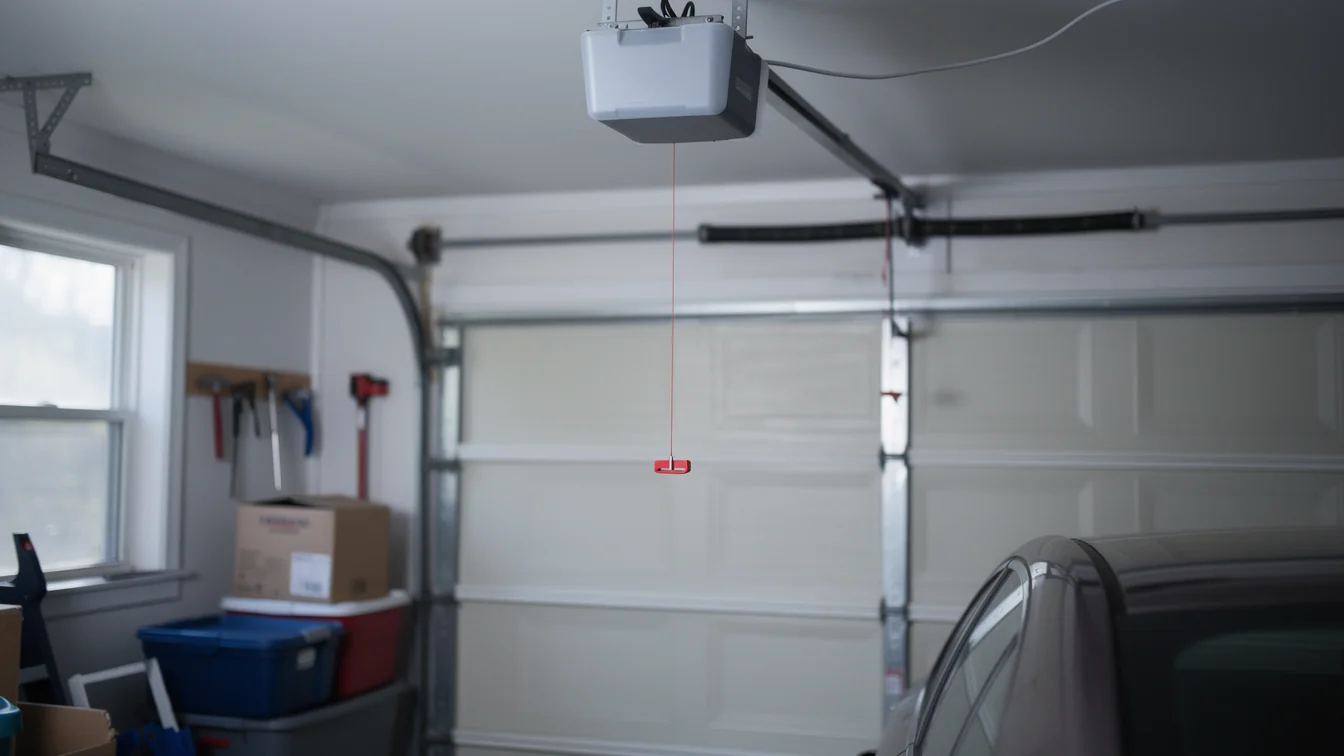
Start with the manual release cord - the red handle hanging from the trolley rail. If you don't know where it is or haven't pulled it in years, find it now, not during a storm. Pulling it disconnects the door from the opener so you can lift it by hand.
Next, check whether your opener has a battery compartment at all. If it was installed as part of a house built before the mid-2000s, chances are it doesn't, and no amount of troubleshooting will add backup power to a unit that was never wired for it.
If you do have a battery backup unit, check the indicator light. A solid green light means it's charged and ready. Blinking or no light means it needs replacing or isn't charging, which you want to know before a storm, not during one.
Last, listen to the opener on a normal day. Grinding, slow travel, or a motor that strains before it even hits resistance are signs of wear that a power cut will expose at the worst time. We don't recommend waiting for an outage to find out your opener was already on its way out.
Questions
Most openers built before battery backup became common run entirely on household power with no onboard power source. When the grid drops, the motor stops wherever it was. This is typical of opener hardware installed in houses built before the mid-2000s, which describes a large share of homes in this area.
Sometimes, but not always. Openers from the 1980s and 90s often lack the wiring harness a backup battery pack needs. In those cases, replacing the opener with a unit built to accept backup power is usually more practical than trying to retrofit the original.
Pull the manual release cord, the red handle hanging from the trolley on the rail inside your garage. This disconnects the door from the opener's carriage so you can lift it manually. Find it and test it before you actually need it in a storm.
Recommendation
More garage door guides for Broken Arrow homeowners.
Broken Arrow homes built mostly 1974-2005 use specific opener and spring hardware.
Read more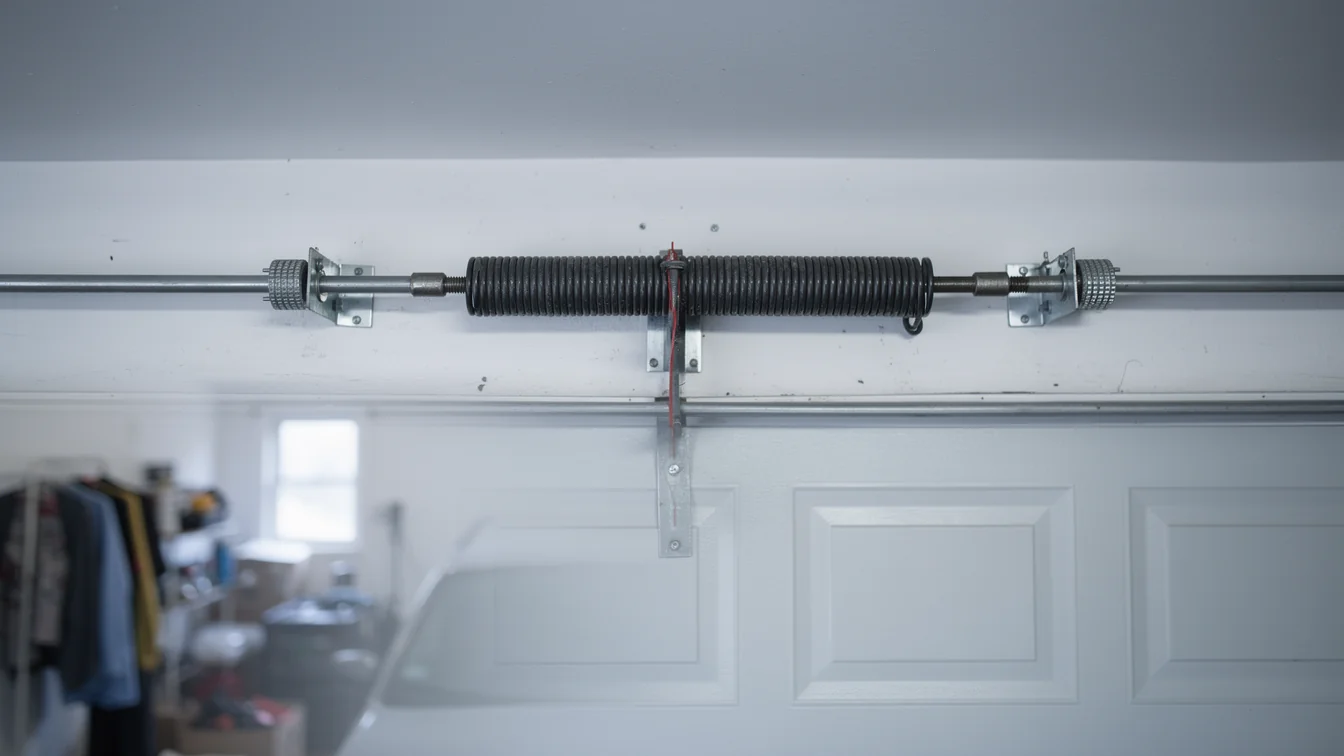
Why Broken Arrow's 1980s-90s housing stock and cold snaps combine to snap garage door springs, what the repair actually involves, and what to check before you call.
Read more
A straight look at what a Broken Arrow garage door service call checks, tied to the 1974-2005 housing stock and cold-moderate winters common across the area's 14 neighborhoods.
Read moreReady when you are
Broken Arrow Garage Door Pros repairs and installs garage doors, springs and openers in Broken Arrow, OK and the surrounding area.